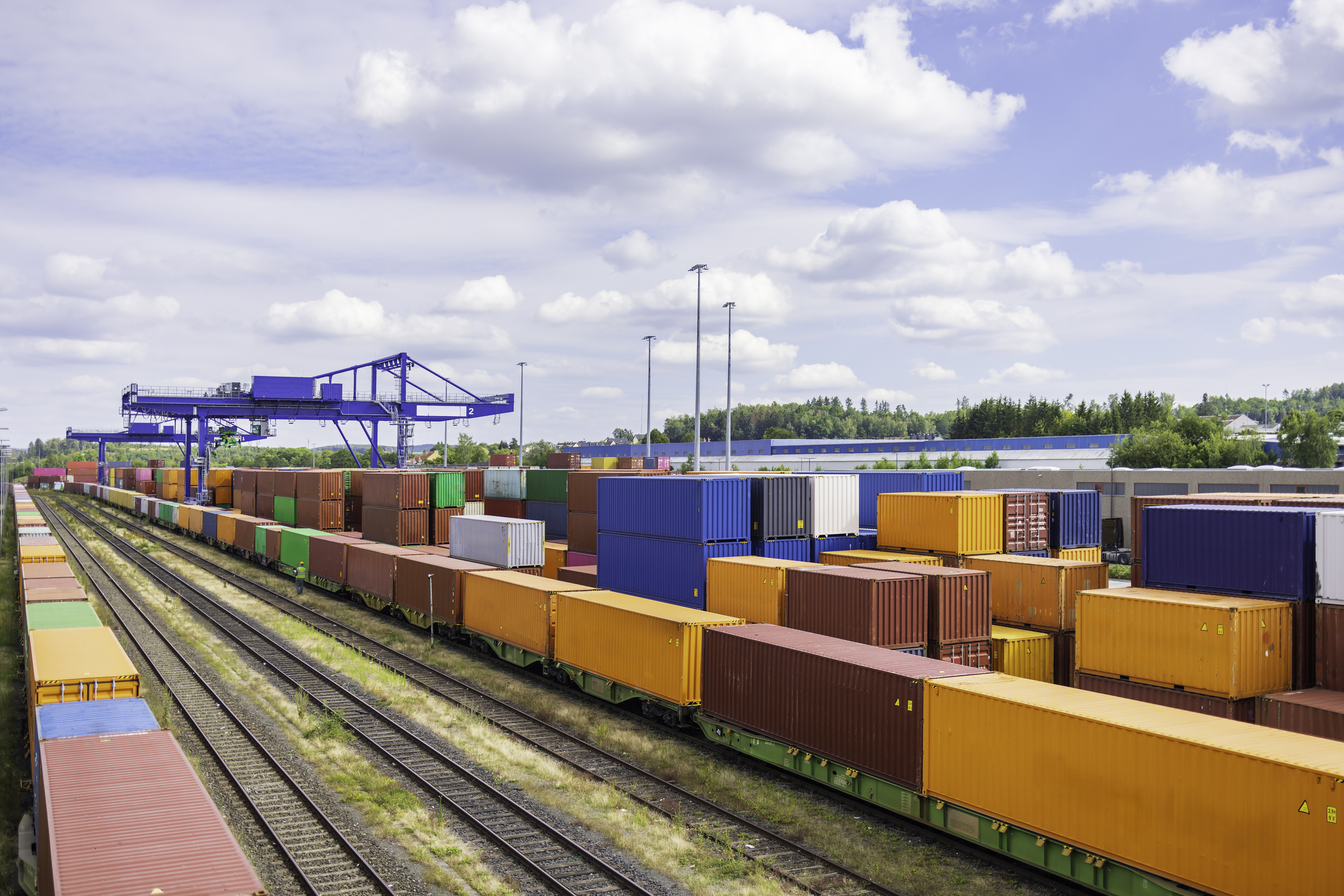

Railroads are under pressure to move more freight, improve reliability, reduce emissions, and protect margins, often without the luxury of building major new infrastructure. The opportunity now is to get more performance from the network railroads already operate. That starts with a different kind of operating model: one that uses AI, real-time data, digital twins, and copilots to turn fragmented signals into coordinated decisions.
This is our idea behind the AI Railroad Brain concept: a network-level intelligence layer that could help rail operators move from localized, reactive decision-making to system-wide orchestration. Instead of treating dispatching, maintenance, safety, workforce planning, and energy optimization as separate problems, it connects them into one operating picture so leaders can make faster, more consistent, and more profitable decisions.
Five freight rail challenges AI can help solve
Across freight rail, five challenges are limiting performance. Each is familiar on its own. What makes them urgent is how they now compound across the network.
1. Reduce network congestion and railcar dwell time
Rail networks lose value when yards, terminals, crews, and equipment are optimized locally instead of as one system. A decision that improves one terminal can create delays downstream. A small disruption can cascade across regions. The result is lower velocity, higher dwell time, underused assets, and constrained capacity.
The issue is not that railroads lack data. They already collect vast operational, asset, and network information. The gap is turning that data into real-time, coordinated decisions that improve the entire network, not just one node at a time.
2. Improve predictive maintenance and asset reliability
Railroads have invested heavily in sensors, wayside detectors, and condition monitoring. These tools can detect anomalies earlier, but detection alone does not improve outcomes. Maintenance teams still need to know which issue matters most, when to act, what resources to assign, and how the decision will affect service.
Without network-aware prioritization, teams can over-maintain some assets, under-respond to others, and miss the broader operational impact. The next step is not simply better prediction. It is better decision-making.
3. Strengthen rail safety and risk management
Rail safety has improved over time, but the risk profile remains asymmetric. Many incidents are low impact, while a small number of high-severity events can create significant operational, regulatory, financial, and reputational consequences.
Most safety systems are built for compliance and response. Modern rail operations require something more: the ability to correlate signals from track conditions, rolling stock, weather, human factors, and network context to anticipate compound risk earlier. The opportunity is to shift from incident response to integrated risk intelligence.
4. Address workforce knowledge loss
As experienced railroad workers retire, organizations risk losing more than labor capacity. They risk losing institutional knowledge: how to diagnose non-obvious failures, manage disruptions under pressure, and balance trade-offs in real time.
That knowledge often lives in people’s experience, not in systems. AI copilots can help capture and scale expertise by giving dispatchers, maintenance planners, safety analysts, and operators access to relevant context, recommended actions, and explanations in natural language. The goal is not to remove people from decisions, but to help every worker make better decisions faster.
5. Optimize fuel efficiency and reduce railroad emissions
Fuel is one of the most direct levers on railroad margin and emissions. Consumption varies by route conditions, train configuration, pacing, congestion, and operator behavior. Yet many fuel optimization approaches remain static, rule-based, and disconnected from real-time network conditions.
AI can help railroads optimize train handling, routing, consist planning, and dwell reduction together. That creates a dual benefit: lower operating cost and measurable progress toward sustainability goals, often without waiting for large-scale infrastructure change.
Building an AI Railroad Brain
The AI Railroad Brain is not a single application but a concept that will help address the challenges highlighted above. It is an intelligence layer that connects operational data, digital models, optimization engines, and human workflows. Its value comes from how these capabilities work together.
- A network digital twin provides a continuously updated view of tracks, yards, rolling stock, crews, terminals, and operating constraints.
- A real-time data platform unifies telemetry, maintenance history, GPS, weather, crew data, customer commitments, and enterprise systems into a shared foundation.
- Decision intelligence uses optimization, prediction, simulation, and machine learning to recommend actions across dispatching, maintenance, safety, workforce, and energy.
- Copilots and agents bring insight into daily work by helping teams ask questions, understand trade-offs, and act with confidence, drawing on the ontology and semantic layer to return answers that reflect rail-specific terms, relationships, and operating context.
Together, these capabilities help railroads move from fragmented insights to system-wide orchestration. A maintenance decision can account for dispatching impact. A safety signal can be evaluated in the context of weather, asset condition, and traffic density. A fuel recommendation can reflect congestion, service commitments, and crew availability. This is where AI becomes operationally meaningful: not by producing more dashboards, but by improving the decisions that shape network performance.
How railroads can start to transform
Railroads do not need to transform everything at once. The most practical path is to start with a high-value operational problem, prove impact, and scale from there.
- Choose a measurable use case. Start with dwell reduction, maintenance prioritization, safety risk detection, workforce decision support, or fuel optimization.
- Connect the right data. Focus on the operational signals needed to improve a specific decision, not on building a perfect enterprise data estate first.
- Embed AI into workflows. Put recommendations where dispatchers, planners, and field teams already work.
- Redesign decision rights. Clarify when AI recommends, when humans approve, and how outcomes are measured.
- Scale across domains. Once value is proven, connect adjacent workflows so improvements compound across the network.
Adoption will matter as much as technology. Rail operations are shaped by thousands of daily decisions made by people across shifts, regions, and functions. AI creates value only when it becomes part of how those decisions are made, reviewed, and improved.
The next rail advantage is intelligence
The future of freight rail will not be defined only by more track, more yards, or more equipment. Those investments will remain important, but the next performance frontier is intelligence: the ability to coordinate decisions across the network in real time.
The concept of AI Railroad Brain offers a practical way to unlock more capacity, reliability, safety, workforce resilience, and fuel efficiency from existing infrastructure. For railroad leaders, the question is no longer whether AI will influence operations. It is how quickly they can turn AI from isolated pilots into an operating capability that improves performance every day.