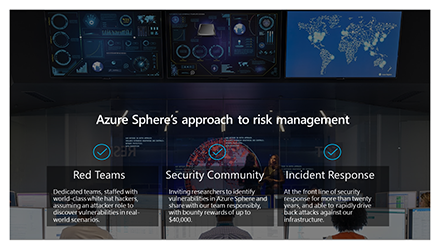
If an internet-connected device performs a non-critical function, why does it need to be highly secured? Because any device can be the target of a hacker, and any hacked device can be weaponized.
Connectivity empowers organizations to unlock the full potential of IoT—but it also introduces new cybersecurity attack vectors.
Secure and verify every identity with Microsoft Entra
Microsoft Entra expands beyond identity and access management with new product categories such as cloud infrastructure entitlement management (CIEM) and decentralized identity.

During the MITRE ATT&CK evaluation, Microsoft Threat Protection delivered on providing the deepest optics, near real time detection, and a complete view of the attack story.
As the volume of remote workers quickly increased over the past two to three months, IT teams in many companies have been scrambling to figure out how their infrastructures and technologies will be able to handle the increase in remote connections.
While Kubernetes has many advantages, it also brings new security challenges that should be considered.
Prevent threats with Microsoft Defender
The Microsoft Defender family offers comprehensive threat prevention, detection, and response capabilities for everyone—from individuals looking to protect their family to the world’s largest enterprises.
With many employees suddenly working from home, there are things an organization and employees can do to help remain productive without increasing cybersecurity risk.
Threat protection that changes our approach to attacks requires built-in intelligence that can understand how an attack got in, prevent its spread across domains, and automatically heal compromised assets.
Today, at the Microsoft Ignite Conference in Orlando, Florida, I’m thrilled to share the significant progress we’re making on delivering endpoint security from Microsoft, not just for Microsoft.